
English Meetings for Non-Native Speakers: Easy Guide
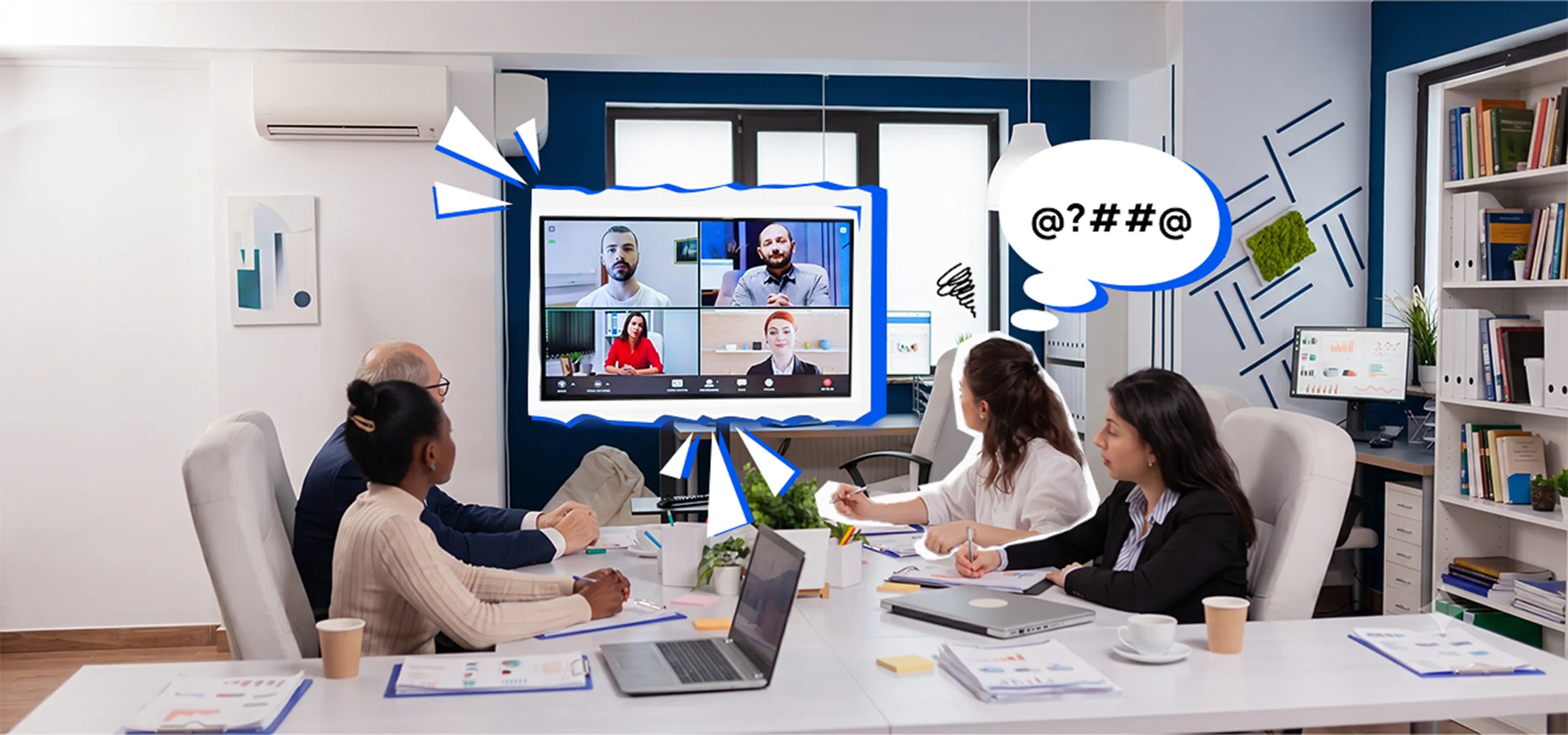
English meetings for non-native speakers often feel exhausting because professionals must listen, translate, take notes, and prepare responses at the same time. This article from Apex Note explains why English meetings drain mental energy and how AI meeting tools can help non-native speakers stay focused, capture key details, and communicate with more confidence.
Key Takeaways
- English meetings are harder for non-native speakers because they require listening, translating, note-taking, and responding at once.
- Missing one key detail can create confusion, delayed work, and extra follow-up after the meeting.
- Preparation, clarification phrases, and AI meeting notes can reduce stress and improve meeting confidence.
- Apex Note helps users transcribe, summarize, and organize meeting information across languages and formats.
1. Why English Meetings for Non-Native Speakers Feel So Draining
English meetings for non-native speakers are not difficult only because of vocabulary. They are difficult because the brain must handle several tasks at once.
A native speaker can usually focus on the discussion, tone, and decision. A non-native speaker often needs to listen carefully, understand accents, translate meaning, remember context, take notes, and prepare a response before the conversation moves forward.
What happens during the meeting
- The speaker talks quickly.
- Several people use different accents.
- Industry terms appear without explanation.
- Participants interrupt or speak over each other.
- The topic changes before the listener finishes processing.
- The listener worries about missing key information.
This creates mental pressure. Even when someone understands most of the meeting, the missing details can still matter. A deadline, decision, client concern, or technical requirement may be hidden in the part they missed.
2. The New Reality of Global English Meetings
Global work has made English the common language for many international teams. A software developer in Vietnam may join a call with a product manager in the United States, a client in Singapore, and a designer in Europe. Everyone may speak English, but not everyone speaks it in the same way.
This creates a real challenge for non-native English speakers in meetings. They are expected to understand fast conversations, respond professionally, and follow decisions in real time.
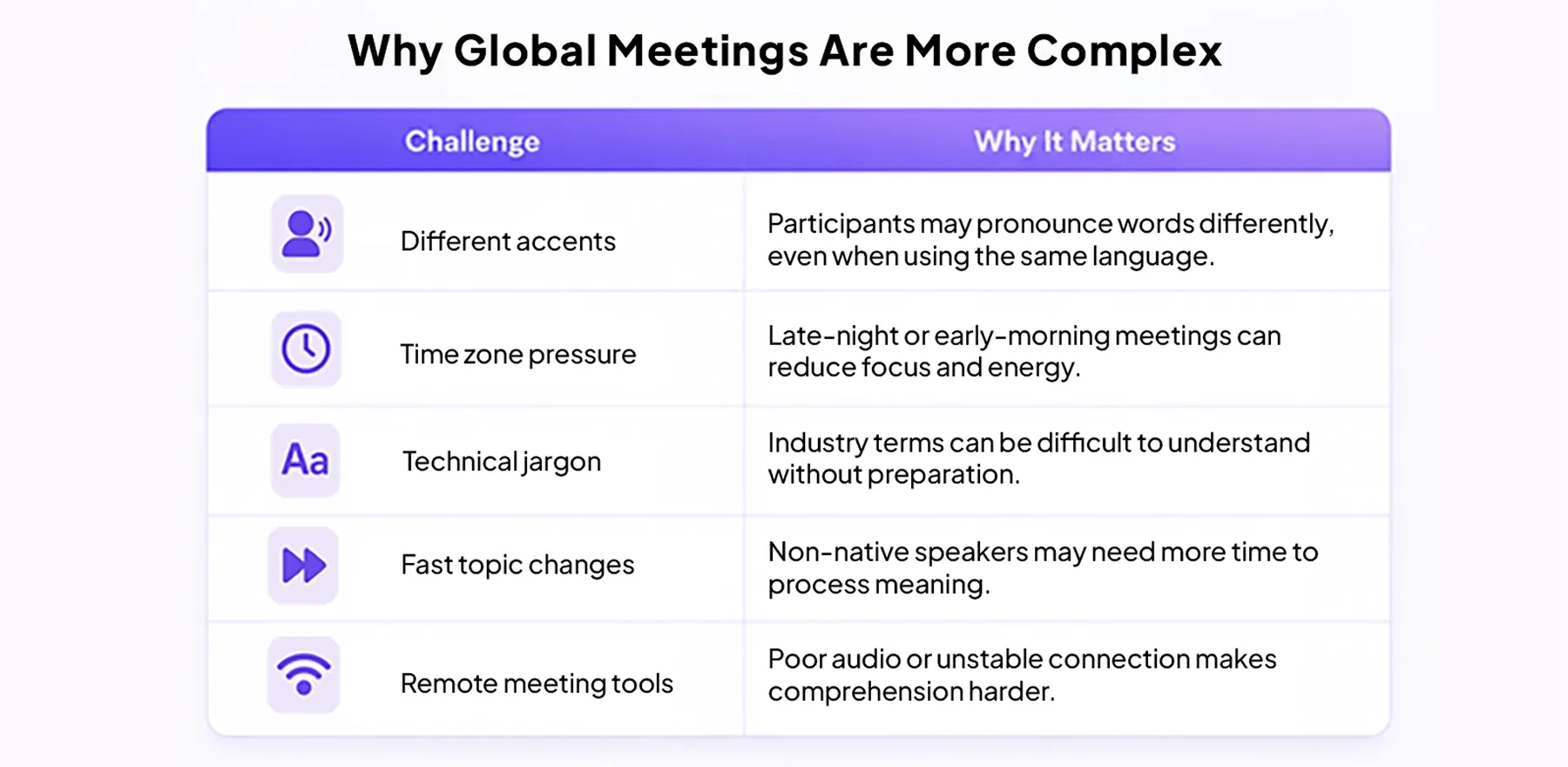
For many professionals, the issue is not a lack of intelligence or skill. The issue is cognitive load. They are doing more mental work than others in the same meeting.
3. Why Missing One Detail Can Create More Work
A small misunderstanding in an English meeting can lead to hours of extra work. Someone may miss a client’s requirement, misunderstand a deadline, or fail to catch who owns the next action item.
This is why meeting notes for non-native speakers are so important. Good notes help professionals review what happened, confirm decisions, and avoid unnecessary back-and-forth after the meeting.
Common problems after a difficult meeting
- The listener is unsure whether they understood the decision correctly.
- Action items are not clear.
- A technical term or client comment needs to be checked again.
- The professional spends extra time asking teammates for confirmation.
- Confidence decreases after repeated misunderstanding.
- Work slows down because the next step is unclear.
Over time, this creates English meeting anxiety. Non‑native speakers may hesitate to speak because they fear making mistakes or misunderstanding others. However, silence can also make them look less engaged, even when they are working hard to follow the discussion.
4. How to Prepare for English Meetings More Effectively
Preparation can reduce stress before the meeting starts. A non-native speaker does not need to understand every possible sentence in advance. They only need enough context to follow the main discussion.
Before the meeting
- Review the agenda and meeting goal.
- Check the names and roles of participants.
- Read related documents or previous notes.
- Prepare key vocabulary and technical terms.
- Write down two or three points you may need to say.
- Prepare clarification questions in advance.
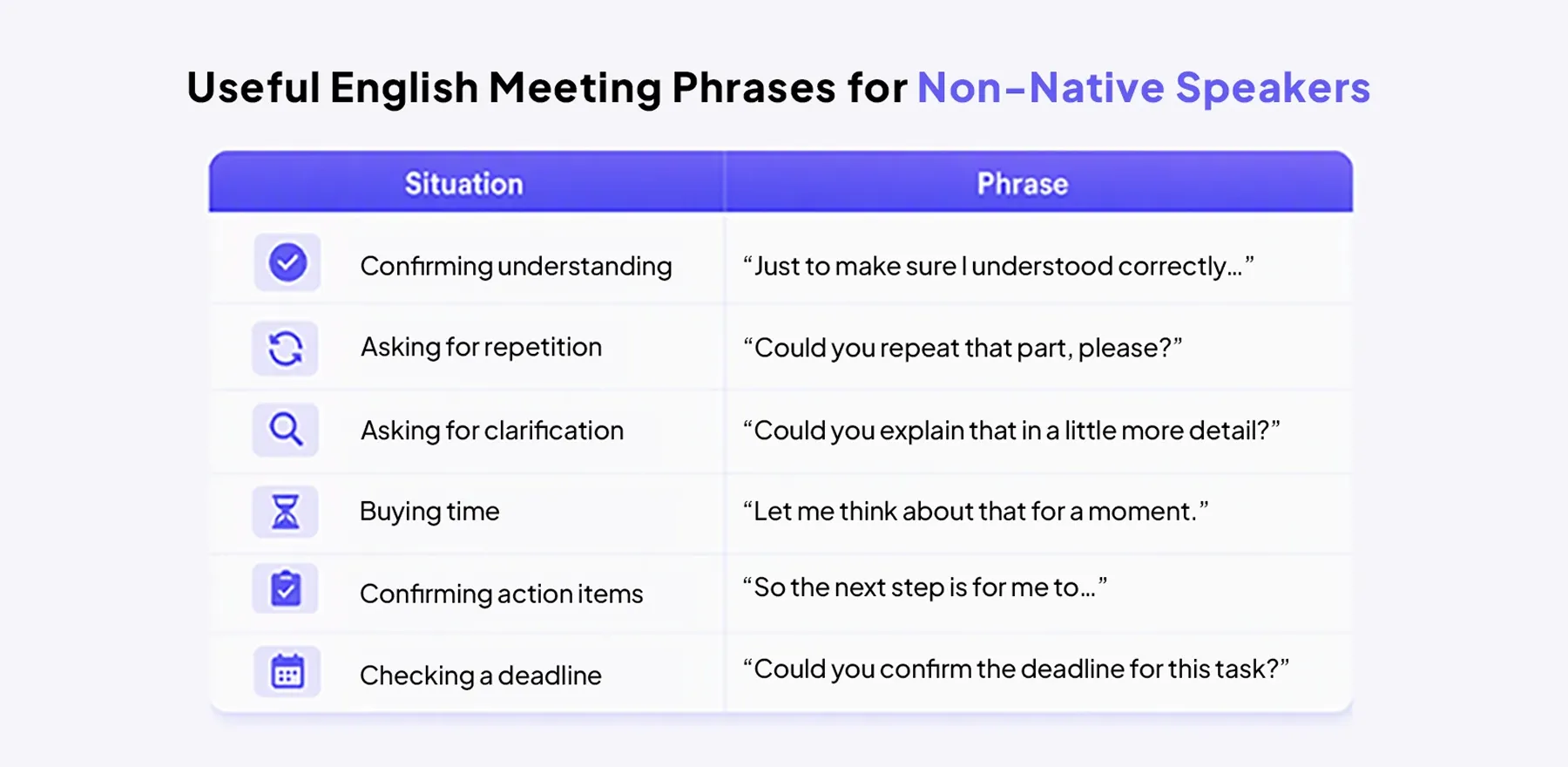
These simple English meeting phrases for non-native speakers help reduce pressure. They also show professionalism because they prevent confusion before it becomes a bigger problem.
5. How to Speak Up in English Meetings with More Confidence
Many non-native speakers wait until their sentence is perfect before they speak. This makes participation harder. In business meetings, clarity is more important than perfect grammar.
People usually care more about your idea than your accent. A short, clear sentence is often better than a long sentence that becomes difficult to finish.
Practical ways to speak more clearly
- Start with one short point.
- Use simple sentence structures.
- Speak slightly slower than usual.
- Ask one question at a time.
- Repeat the key point when needed.
- Confirm your understanding before responding.
For better workplace communication for non-native English speakers, teams should also create a meeting culture where clarification is normal. Asking someone to repeat or explain a point should not be treated as a weakness. It is a way to protect accuracy and teamwork.
6. How AI Meeting Assistants for Non-Native Speakers Can Help
Technology cannot make someone fluent overnight. However, the right tool can reduce the mental load during and after meetings
An AI meeting assistant for non-native speakers can help capture conversations, summarize key points, and organize action items. This allows professionals to focus more on the discussion instead of trying to write everything down manually.
How Apex Note helps
Apex Note is designed to support professionals who work across languages, meetings, and documents.
- Start with one short point.
- Use simple sentence structures.
- Speak slightly slower than usual.
- Ask one question at a time.
- Repeat the key point when needed.
- Confirm your understanding before responding.
Instead of forcing your brain to listen, translate, remember, and take notes at the same time, Apex Note helps reduce the gap between what was said and what needs to be done next.
7. How Teams Can Make English Meetings Easier for Everyone
The responsibility should not fall only on non-native speakers. Global teams can improve meeting quality by making communication clearer for everyone.
Better meeting practices
- Share the agenda before the meeting.
- Avoid unnecessary jargon.
- Pause after important points.
- Summarize decisions before moving on.
- Assign clear action items.
- Send meeting notes after the call.
- Record or transcribe important meetings when possible.
- Encourage clarification without judgment.
These habits improve meetings for native and non-native speakers. They also reduce confusion, increase accountability, and make global collaboration more inclusive.
8. Author and Business Transparency
This article is prepared by the content and product research team of Apex Note. Apex Note helps professionals capture, summarize, and organize meetings, documents, audio files, images, and knowledge across languages.
The purpose of this article is to help global professionals, remote teams, managers, and non-native English speakers understand why English meetings can feel exhausting and how AI-powered meeting notes can reduce communication pressure. The content is educational and commercial in nature.
Conclusion
English meetings for non-native speakers can feel exhausting because they require more than listening. They require translation, interpretation, note-taking, memory, and fast response under pressure. This does not mean non-native speakers are less capable. It means they are processing more information at once. With better preparation, clearer team habits, and support from Apex Note, professionals can reduce meeting stress, capture important details, and contribute with more confidence.
FAQ
1. Why are English meetings hard for non-native speakers?
English meetings are hard for non-native speakers because they require several mental tasks at the same time. A participant may need to understand accents, translate meaning, follow business context, take notes, and prepare responses quickly. This creates cognitive load and makes it easier to miss small but important details during fast conversations.
2. How can non-native speakers speak up in English meetings?
Non-native speakers can speak up more confidently by preparing key points before the meeting, using simple sentences, and asking clarification questions when needed. They do not need perfect grammar to contribute valuable ideas. Phrases such as “Just to make sure I understood correctly” can help confirm meaning and reduce communication anxiety.
3. What should I do if I miss details during an English meeting?
If you miss details during an English meeting, you should ask for clarification as soon as possible. After the meeting, review meeting notes, recordings, or AI summaries to confirm decisions and action items. Using an AI meeting assistant can help capture what was said and reduce the risk of misunderstanding important information.
4. Can an AI meeting assistant help non-native English speakers?
Yes, an AI meeting assistant can help non-native English speakers by transcribing conversations, summarizing discussions, and identifying key action items. It reduces the pressure of taking manual notes while listening in a second language. This helps users focus on the conversation and review important points after the meeting.
5. What are useful English meeting phrases for non-native speakers?
Useful English meeting phrases include “Could you repeat that part, please?”, “Could you explain that in more detail?”, and “Just to make sure I understood correctly.” These phrases help speakers confirm meaning without sounding unprofessional. They also prevent small misunderstandings from becoming bigger workflow problems later.
6. How can companies support non-native English speakers in meetings?
Companies can support non-native English speakers by sharing agendas early, avoiding unnecessary jargon, summarizing decisions, and sending meeting notes after each call. Teams should also encourage clarification questions and use transcription or summary tools for important meetings. These practices improve communication quality for everyone, not only non-native speakers.